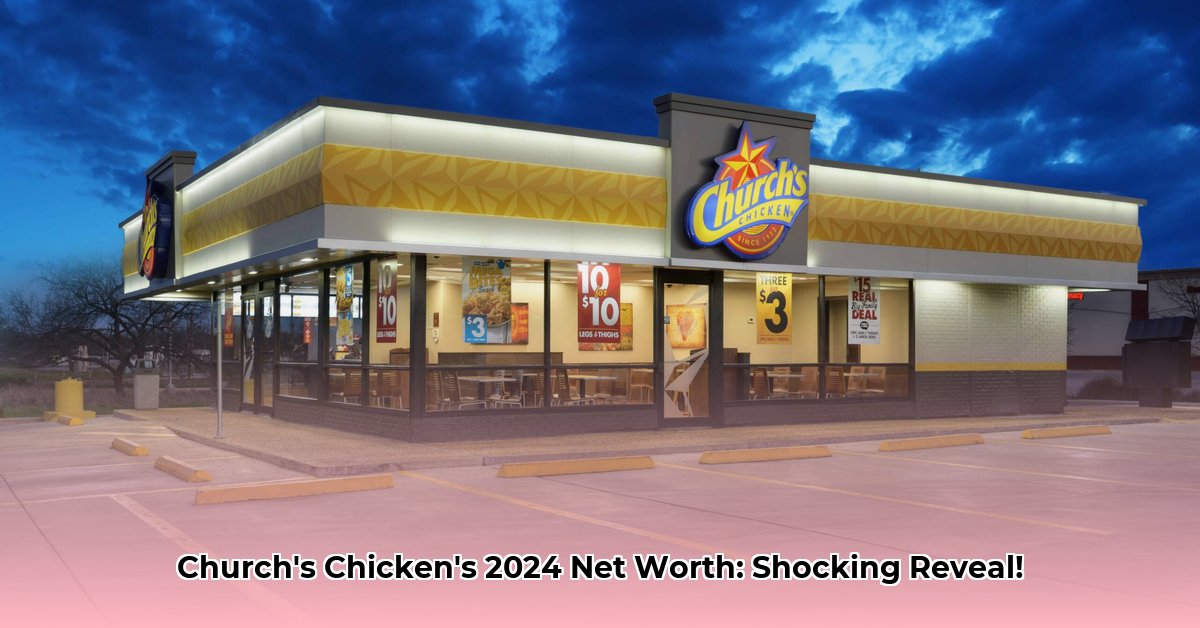
Determining the precise net worth of Church's Chicken is a challenge, as the company's financial details aren't publicly available. However, by analyzing its performance, franchise model, and competitive landscape, we can gain valuable insights into its financial health and future prospects. This deep dive explores Church's journey, from its humble beginnings to its global presence, offering a comprehensive understanding of its financial standing.
A History of Growth and Strategic Adaptation
Church's Chicken, founded in 1952, has evolved into a global fried chicken powerhouse with over 1,500 locations. Its growth hasn't been without obstacles. A Chapter 11 bankruptcy following an acquisition serves as a stark reminder of the challenges even established brands face. A significant data breach in 2019 further underscored the risks inherent in rapid expansion. Yet, Church's demonstrated remarkable resilience. Its strategic rebranding as "Texas Chicken" in some international markets, tailored to local preferences, exemplifies its adaptability. This strategic flexibility, combined with menu innovations, has fueled its continued growth. But how sustainable is this growth, and what is the company's overall financial health?
The Franchising Model: A Balancing Act
Church's widespread success hinges on its franchise model, enabling rapid expansion with minimal upfront investment from the parent company. However, this model presents both advantages and disadvantages. Aspiring franchisees face substantial initial costs, ranging from $805,000 to $1,896,000, plus ongoing franchise fees (10% of gross sales). While the average unit volume (AUV) of $1,256,000 is respectable, it lags behind some competitors averaging around $1,662,000. This gap highlights the need for improved operational efficiency and increased profitability at the individual restaurant level, directly impacting the overall financial picture. This is key to understanding the company's overall financial health, even if its net worth remains undisclosed.
Financial Performance and Competitive Dynamics
Although Church's Chicken's precise net worth remains confidential, analyzing available data provides valuable insights. Key performance indicators such as AUV, franchise fees, and aggressive expansion targets (over 2,000 locations by 2028) paint a picture of a company striving for growth. However, narrowing the AUV gap with competitors is crucial for long-term sustainability. The competitive landscape demands continuous innovation and adaptation to maintain market share and profitability. How will they achieve continued growth and improve their overall financial standing? This is the central question driving their strategic planning.
Future Outlook and Strategic Considerations
Church's future success hinges on several strategic initiatives. Improving operational efficiency is paramount to boosting profit margins. Targeted marketing campaigns, focusing on specific demographic segments and leveraging digital platforms, can enhance brand visibility and drive sales. Investing in technology, from improved online ordering systems to streamlined operations, will enhance the customer experience and increase efficiency. Balancing cost control with menu innovation, by incorporating exciting seasonal items and adapting to local tastes in international markets, is also vital. Finally, addressing the challenges faced by franchisees, perhaps through alternative franchise models or support programs, could improve franchise profitability and drive overall growth. Each of these elements plays a significant role in shaping the company's financial trajectory.
Conclusion: A Resilient Brand Navigating a Challenging Landscape
Determining Church's Chicken's net worth remains a complex task. However, analyzing its history, current challenges, and future plans reveals a resilient brand with significant growth potential. Its adaptability, global footprint, and history of overcoming adversity suggest a solid foundation. However, sustaining profitability, maintaining a competitive edge, and ensuring franchisee success are key to continued financial success and a clear picture of its long-term net worth. The company's future depends on strategic execution and a keen adaptability to the ever-changing fast-food landscape.